
Table of Contents
ToggleMany people consider car paint correction when they notice swirl marks, light scratches or oxidation on their car paint. But naturally, the question arises: Is it really safe, or can it damage the car paint if done incorrectly?
When done right by an experienced professional with the correct technique and tools, paint correction can be safe. However, poor techniques and over-polishing can damage the clear coat.
This guide will cover the ins and outs of paint correction, which includes, but is not limited to, the what, why, potential risks, and most importantly, how to maintain the protection and shine of your vehicle’s paint.
Car paint correction only gains its true value when the work is done correctly and by experienced hands. If you’re looking for experienced professionals in Darwin, our team is ready to help. At Territory Proud Mobile Cleaning, we not only work to reduce paint defects, we also focus on preserving your car’s long-term appearance and protection. Our Professional Paint Correction, Ceramic Coating, Cut and Polish, Interior and Exterior Detailing, Upholstery Steam Cleaning, Window Tinting and complete Mobile Car Detailing services help to restore your car to its like-new look. If you want your car to shine and be protected not just today, but for many years to come, then our experienced team is ready to provide you with the right solution.
What Is Paint Correction? Paint Correction Explained
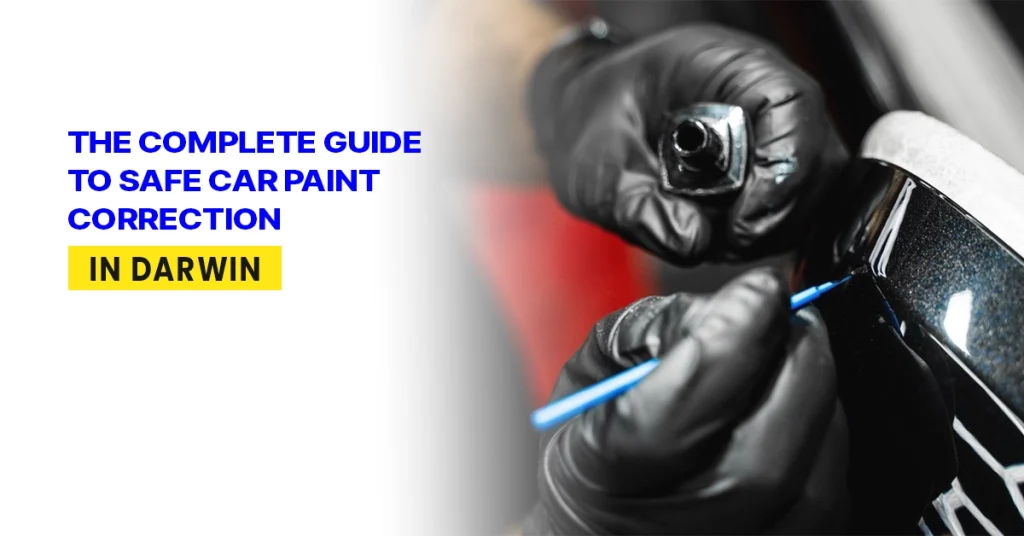
Paint correction is a professional process through which scratches, swirl marks, oxidation, and other paint defects on your car paint are safely reduced or removed. It is a special detailing technique to restore the gloss and clean look of your car paint.
Simply put, paint correction is different from ordinary car detailing or polishing. It is not the same as ordinary car detailing or just polishing. Car detailing is primarily done to clean and protect the car, while polishing removes minor imperfections and enhances its shine.
But paint correction works deeper by removing imperfections and helps achieve a flawless finish by reducing scratches and imperfections. So if done correctly, it not only enhances the beauty of the car but also helps protect the value of your automotive investment.
Is Paint Correction Safe for Your Car?
Yes, of course. If done correctly, paint correction is safe and does not damage your car paint. Rather, it helps to remove minor defects and restore the gloss of the paint. However, its safety depends a lot on who is doing the work and how it is done. That is why professional paint correction is always a good decision.
During paint correction, a very thin layer of the clear coat is carefully polished using compound, polisher, and a light abrasive. A skilled professional detailer usually checks the paint with a paint depth gauge to ensure no more clear coat is removed than necessary. But if the wrong rotary machine or inexperienced hands are used, there is a risk of damaging paint, burning the paint or clear coat failure.
Can Paint Correction Damage Your Car's Paint?
Yes, but usually only when the work is done incorrectly. Excessive pressure, the wrong compound, or an inexperienced detailer can cause excessive clear coat removal. On the other hand, proper paint correction can be done safely with a dual-action polisher along with the correct technique and the right technique.
How Much Clear Coat Is Actually Removed?
Most paint correction processes remove only a few microns of clear coat. This amount is usually safe, as the goal is to reduce defects, not remove unnecessary clear coats.
How Professional Paint Correction Works
When it comes to professional paint correction, polishing is just one step in the overall process. As with all quality automotive detailing, the vehicle’s paint is thoroughly inspected first, and then a paint depth gauge is used to measure how much clear coat remains and if it is safe to proceed with correction.
Based on the paint’s condition, the appropriate polish, cutting pad, or polishing pad is selected. The best detailers will use the right tools and products for each stage to achieve the best results while keeping the paint as intact as possible.
Single-Stage vs Multi-Stage Paint Correction
If the vehicle’s paint has minor swirl marks or other small defects, a single-stage correction will generally be enough. For more visible defects, deep scratches, and the like, a multi-stage correction will be warranted. For a better finish, this multi-stage process is more labor-intensive and involves more polishing steps.
When Does a Car Need Paint Correction?
If your automotive paint has visible defects, scratches, and imperfections or the gloss is not as good as it used to be, then car paint correction may be necessary. This is not only for older cars, but also sometimes effective in fixing minor paint defects on new paint. However, if the scratches are very deep, correction alone may not be enough, in which case touch-up paint or other repairs may be required.
Signs Your Vehicle Requires Paint Correction
If swirl marks are clearly visible in sunlight, the gloss and shine of the paint has decreased, or the finish does not look as smooth as before, then these are indications that your vehicle may require paint correction.
Paint correction reduces minor paint imperfections, and the car regains a cleaner, more refined, and almost mirror-like finish.
Is Paint Correction Worth It?
Yes, in most cases, paint correction is worth the investment, especially if you want to keep your car’s appearance beautiful for a long time. It improves the finish of the paint and makes the overall look of the car much more premium.
However, it should be done considering the current condition of the paint, the type of defects and your budget. Not all cars require the same type of correction, so it is best to consult a professional detailer first.
How to Protect Your Car After Paint Correction
After paint correction, it is essential to maintain proper care. Most results from paint correction are not long-lasting without proper care. To maintain the results, it is best to wash the car regularly, post corrections, and use good protection products and polish. Regular use will maintain the smoothness and shine of the paint.
Ceramic Coating vs Wax: Which Is Better?
For long-lasting protection of paint, the best option is ceramic coating. After applying ceramic coating, a durable protective layer is formed. This protects the paint from UV rays, dirt, and water. Proper coating application is essential for the best results. for good results.
Wax and sealants provide good shine but don’t last as long as ceramic coating. They do bring a nice luster to the paint. If long term protection with minimal maintenance is needed, ceramic coating is the best option.
Conclusion
Paint correction is a good option for safely restoring the luster and shine of your car paint. Choosing an experienced professional detailer is essential to maintain proper paint protection to ensure the best results. If you want to keep your car paint looking its best, it is a good investment. For the best results, book our detailing package.
FAQs
Paint correction can improve scratches left by light contact, issues caused by washing, and other minor paint issues. Deeper scratches that extend beyond the clear coat may require touch-up paint or other repair methods.
It is possible they will need correction, as minor swirl marks and paint issues can occur during the manufacturing process and subsequent transportation and dealership preparation. Other paint issues can arise as a result of poor wash practices. It is best to evaluate on a case-by-case basis.
Not if done correctly. An experienced detailer refines the clear coat very slightly as needed, which is usually safe. However, there is a risk of damage to the clear coat if done by inexperienced hands or using the wrong technique.
Although it is not necessary, it is a very good decision. Applying ceramic coating after paint correction maintains the newly found gloss for a long time and provides additional protection to the paint from dust, UV rays, and water stains
There is no fixed schedule for paint correction. for paint correction. It is recommended to have the car assessed by a professional to determine correction needs if paint issues become problematic. How and where you store your car also factors into paint issues.
If you want to keep your car’s paint beautiful for a long time and also think about resale value, then of course. It not only makes the car look more attractive, but also creates a good foundation for subsequent paint protection. Therefore, properly done paint correction is considered a profitable investment in many cases in the long run.

Masum Bellal Shuvo holds a BEng (Hons) in Aeronautical Engineering from the University of South Wales. He is the owner of Territory Proud Mobile Cleaning, a leading car detailing and cleaning service in Darwin and surrounding areas, including Palmerston, Coolalinga, and Humpty Doo.