

Table of Contents
ToggleHow to Clean Mold Out of a Car: Causes, Prevention and Safe Cleaning Tips
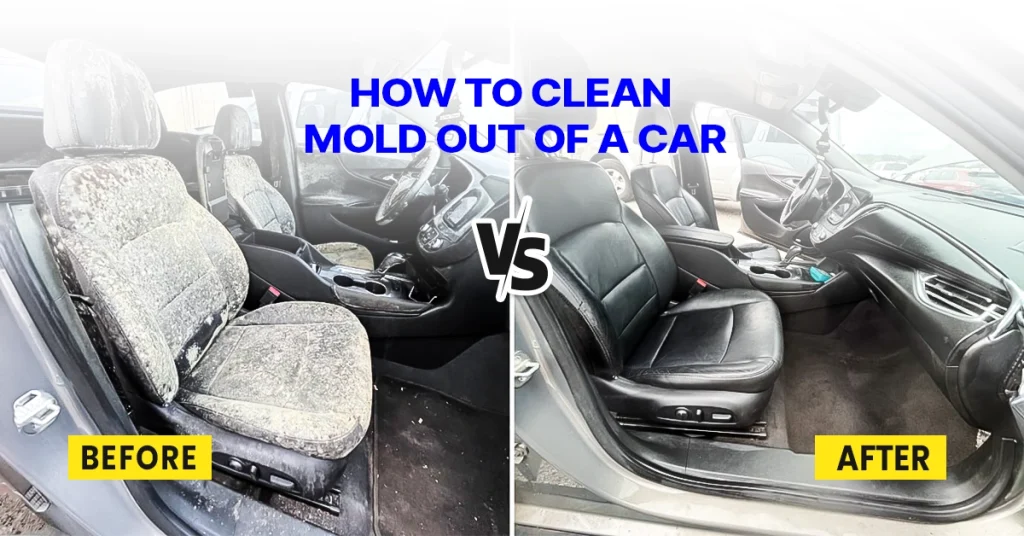
Mold in the car. That stale smell when the door opens. Dark patches on the headliner, the seat fabric. None of it is good, and the mold won’t go away on its own.
Moisture gets trapped in the cabin, and can’t dry out. Wet carpets. Damp seats. Water behind door trim. Wiping the visible mold off won’t fix it. The affected areas need cleaning. The interior needs drying. The water source needs finding.
This guide explains what causes mold, how to identify it, how to clean it step by step, and how to prevent it from returning.
For persistent mold or moisture problems inside your vehicle, Territory Proud Mobile Cleaning offers mobile car cleaning services.
What Causes Mold to Grow Inside a Car?
Trapped moisture is the main cause of mold growth in cars. Wet carpets, damp upholstery, and poor ventilation can create suitable conditions for mold to grow. Finding and fixing the source of moisture helps prevent it from returning.
Moisture, Humidity, and Poor Ventilation
A car left closed in humid conditions can retain moisture, creating an environment where mold can grow. Humidity stays high. Air doesn’t circulate. Damp surfaces stay damp for days. That’s all it takes.
Wet gear makes it worse. A soaked jacket on the back seat. A brolly dripping in the footwell. Floor mats saturated from a walk in the rain. Get it out fast. When conditions are suitable, ventilate the car to help the interior dry.
Water Leaks, Wet Carpets, and Damp Upholstery
Water leaks are a common cause of mold in cars. Damaged door seals, worn weatherstripping, and blocked sunroof drains can allow moisture to enter the interior. Very often, water finds its way in and pools under the carpet or inside the seat foam. The top looks dry. Underneath, still damp enough for mold.
Mold on seats or carpet shows as patches. Greenish, grey, black, sometimes white. One spot keeps getting damp, or the interior never dries out? That’s a leak. Fix it, don’t just wipe the surface.
Air Conditioning Problems and Hidden Moisture
The AC pulls humidity out of the cabin air. Condensation’s supposed to drain out through a tube underneath the car. Those tubes block up. When that happens, water backs up into a spot that’s out of sight, behind the dash or under the passenger footwell carpet. Standing water in hidden areas can create conditions that encourage mold growth.
A musty smell that appears when the AC runs can indicate mold or moisture-related problems in the ventilation system. Could be something else though. If the smell sticks around even after the interior’s been cleaned, the AC system’s the likely culprit. Get a pro to look at it.
How to Identify Mold in Your Car and Understand the Risks
Mold’s not always visible. It tucks itself away. Under floor mats. Inside seat foam. Behind door panels. In the trunk. Under the spare. Visible mold may indicate growth in hidden areas, such as beneath carpets or inside upholstery. That’s the thing about mold in cars. The visible bit is rarely the whole story.
Common Signs of Mold Inside a Car
Here’s what to look for. Random patches on the fabric. A smell that’s off, stale, the kind that doesn’t fade. Damp spots where there’s no reason for dampness. Mold isn’t always one colour either. Mold colour alone cannot reliably identify the type of mold or determine the level of risk. White, green, grey, black, you will see it varying from place to place.
Pull the mats. Check under them. Check the trunk. Check the door rubber. That stale smell? A persistent musty smell may indicate hidden moisture or mold, even when the visible surfaces look clean. However, other problems can cause similar odors, so further inspection may be needed.
Is Mold in a Car Dangerous?
A car cabin is tiny and sealed. Mold growth inside a poorly ventilated car can affect indoor air quality. Someone with allergies or asthma could start coughing from it.
If you suspect mold exposure, avoid disturbing the affected area. Poking at mold just flings spores into the air. A heavy infestation, mold that returns after cleaning, or growth inside the AC ducts, that’s professional territory.
Getting the visible mold off is only one piece of it. The moisture source needs tracking down and fixing too, otherwise the mold returns.
What You Need Before Cleaning Mold Out of a Car
Get the gear together first. Work out how far the mold’s spread. The right gear plus a clear picture of the scope makes things safer and more effective.
Safety Gear and Cleaning Supplies
The kit. Nitrile gloves. Safety glasses. Wear appropriate protective equipment for minor cleaning tasks. Avoid disturbing extensive mold growth and seek professional advice. Clean microfiber cloth. A cleaner for the surface. Fabric? An upholstery cleaner or a dedicated mold remover. Hard trim? An interior cleaner. Choose a cleaner that is compatible with the affected material and follow the manufacturer’s instructions. For mold that has penetrated porous materials, seek professional advice.
Pick products based on what’s being cleaned. Fabric needs a different product to hard trim and vinyl. Mold gone deep into porous material like seat foam? That’s a professional job, not DIY.
What to Avoid When Cleaning Car Mold
Hard rules. Don’t mix cleaning products. Toxic gas is a risk. Don’t soak carpets. Water feeds mold. Don’t scrub at visible mold. Spores go everywhere. Keep liquids away from electronic components, including buttons, screens, and control panels. Air fresheners don’t fix a musty smell. They just hide it.
Test on a hidden spot first. Read the label. Widespread mold or growth that keeps returning? A professional is the better call. Guessing won’t sort it.
For additional safety guidance, review the basic mold cleanup steps published by the US Environmental Protection Agency.
How to Clean Mold Out of a Car Step by Step
Three things to it. Clean the affected surfaces. Dry the interior out properly. Fix whatever’s letting moisture in. Skip one of those and it’ll be back.
Prepare the Car and Inspect the Affected Areas
Get the car somewhere with good airflow. Outside in the shade, or a garage with the door up. Mask on. Gloves on. Pull out the loose stuff and the floor mats. Then go through the interior, seats, carpets, trunk, under the mats, and see what’s there.
Cleaning mold off interior surfaces won’t fix a thing if moisture is still hiding underneath. Widespread growth? A professional assessment is safer.
Clean Mold From Hard Interior Surfaces
Small spots? A compatible interior cleaner, applied per the label. When cleaning mold from the dashboard, keep liquids away from buttons, screens, seams, and electrical components. Damp cloth. Not soaking.
Soft cloth. Gentle wipe. Aggressive scrubbing just throws spores around. If the mold returns or the surface is damaged, investigate the underlying cause. Further assessment may be necessary
Remove Mold From Car Seats and Carpets
How to get mold off car seats and carpets depends on the fabric and how bad it’s got. A suitable upholstery cleaner is where it starts. Don’t go heavy on the water. Extra moisture just feeds the issue.
The thing is, mold doesn’t stay on the surface. It works its way down. Into the seat foam. Into the carpet backing. Bad contamination, or it’s gone deep, that’s a professional job. Worst case, the affected material has to come out and be replaced.
Dry the Interior and Remove Lingering Odors
Drying the interior out means getting rid of the excess moisture and getting air moving until everything’s properly dry. A dehumidifier helps. Parking in the sun with the windows down a touch works too.
Musty smell hanging around? Don’t mask it. The source of the moisture is the real problem. Look for leaks. Look at the AC drain. After a clean, keeping the cabin dry is what stops mold coming back. A returning smell needs looking into, not ignoring.
How to Prevent Mold From Returning to Your Car
Mold’s gone? Moisture control is what keeps it gone. A few habits and some timely maintenance. That’s the difference.
Keep Your Car Dry and Prevent Moisture Buildup
Obvious stuff first. Wet floor mats, brollies, damp gear. Get it all out of there straight away. Spill something? Dry it immediately. Look for leaks. On a day that’s dry, let the cabin air out.
Hidden spots too. Under the mats. Round the trunk. Damp carpet, or the smell’s back? The source needs finding, not hiding behind an air freshener. A dry interior stops mold dead.
When to Get Professional Car Mold Removal
Mold that keeps returning. Mold spreads across multiple surfaces. Mold went deep into carpet and seat foam. In these situations, professional assessment and cleaning may be necessary. Same for suspected mold in the AC system, or when the moisture source can’t be tracked down.
Territory Proud Mobile Car Cleaning offers mobile car cleaning in Darwin, including interior cleaning at home or at work, interior deep cleaning, and seat steam cleaning. Suspected extensive contamination? Get in touch to discuss the vehicle and whether specialist remediation is needed.
Conclusion
Knowing how to clean mold out of a car handles the visible stuff. But lasting results need a dry cabin and a fixed moisture source. Check the carpets, seats, hidden spots now and then. Damp? Musty? Mold returning, or deep in the upholstery? Professional territory. Territory Proud Mobile Car Cleaning does interior deep cleaning at home or at work.
FAQs
Cleaner suited to the surface, used per the label. For hard trim, something like Meguiar’s Quik Interior Detailer. Get the interior dry with a dehumidifier, or leave the doors open for a few hours. Fix the moisture source. Mold deep in the upholstery or covering a large area? A professional clean is the likely call.
An upholstery cleaner for fabric. Chemical Guys Fabric Clean, or a dedicated mold remover. Don’t soak it. Mold gets under the surface. Into the foam. Into the carpet backing. Bad contamination? A professional is the safer bet.
Moisture trapped in the vehicle, that’s the cause. Usual suspects: a perished door seal, wet floor mats, damp seats from a window left down, high humidity and prolonged moisture buildup, an AC drain blocked with debris. A dry interior keeps mold at bay.
Check the carpets, seats, trunk, and vents for hidden moisture or mold. A moisture meter can help spot it. Clean what’s affected. Dry it properly with a fan or dehumidifier. Smell still there? The underlying cause needs sorting. Not a freshener.
It can be. Coughing, throat irritation, allergy flare-ups for some people. Asthma or mold allergies raise the sensitivity. Sometimes triggering an attack. Leave heavy growth alone. If it’s through the whole interior, getting a professional in is the right move.
The moisture’s still there. Under the carpets. In the seat foam. Round the door seals where the rubber has perished. Fix the leaks. Dry the interior. Run a dehumidifier for 24 hours. Track down any dampness that returns. Surface cleaning alone won’t sort it.

Masum Bellal Shuvo holds a BEng (Hons) in Aeronautical Engineering from the University of South Wales. He is the owner of Territory Proud Mobile Cleaning, a leading car detailing and cleaning service in Darwin and surrounding areas, including Palmerston, Coolalinga, and Humpty Doo.