
Table of Contents
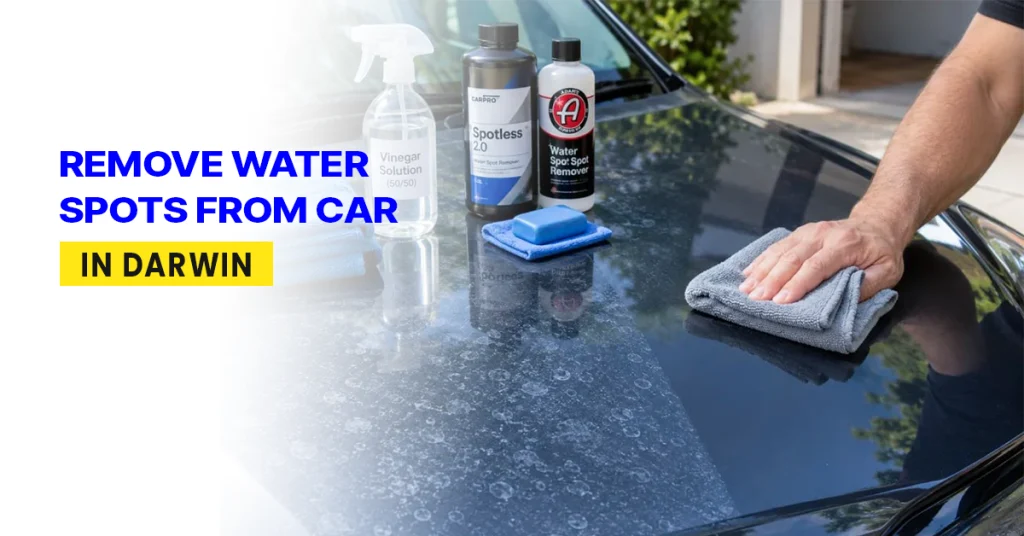
ToggleWash done, bonnet gleaming, you walk off. Come back an hour later and the sun’s catching the panel at just the angle to show that faint haze you missed. Water spots — the rings left behind after a drop dries. The water goes; the minerals (calcium, mostly, and magnesium) stay put. Darwin makes this worse. The sun bakes a drop dry in the time it takes to grab a chamois, and the spot’s set before you’ve finished the panel.
To remove water spots from car paint and glass, it’s two steps. Wash the panel first. Then take a paint-safe or glass-safe water spot remover to the marks themselves. Minerals that have been sitting a while take specialist work. Etched marks are a different animal. Those usually need a machine.
What’s coming up: where these marks come from in Darwin, the three spot types, how to handle paint and glass, and prevention. That last one most readers skip, which is a pity, because it’s where the time saving actually shows up.
What Causes Water Spots on Car Paint and Glass?
Water sits on the car. The water evaporates. Whatever it carries along, the calcium salts and magnesium and the rest, that’s what stays behind, fused to the paint and glass on a level the eye can’t pick up.
Hard Water and Mineral Deposits
Tap water is never just water. Calcium, magnesium, plus a few others, all dissolved in the water you’ve just rinsed over the panels. Rinse the car. Walk off. The sun does the rest. That crust sitting on the paint? That’s what was in the water. Ordinary car soap barely touches it.
Rainwater, Sprinklers and Car Washing
The rain isn’t clean either. It picks up airborne grit on the way down and lays it on your paint. Sprinkler hits are the same story as water lands on a warm panel and just sits. Sun finishes it. Heat drives the moisture off in seconds. What’s left bakes straight into the clear coat. What you’ve got there is a hard water stain. Not a smudge.
Different Types of Water Spots and Their Effects on Your Car
Once you know how the marks progress, you can tell how close you’re getting to permanent damage.
Surface Water Spots vs. Etched Water Spots
- Surface water spots: the easy one. Fresh crust on top of the clear coat, and the right product wipes it off.
- Stubborn water spots on car paint: minerals baked in under heat. Soap won’t shift them because the bond is set.
- Etched water spots: the ugly one. Acidic fallout in the droplet eats into the finish and leaves a real pit. Polishing is the only fix here. Wiping won’t reach the bottom of an etch.
How Water Spots Affect Car Windows and Glass
Glass has microscopic pores. The minerals settle into every one of them. Night driving is where you’ll spot the damage first, with oncoming headlights scattering through the haze on the windscreen. Leave it and the wipers lose their bite too. Etched spots on glass are pretty much permanent.
How to Remove Water Spots from Car Paint and Glass
Catching them early matters. Like, once they etch, you’re into machine work. Here’s the safe way to do it.
How to Remove Water Spots from Car Paint
Fresh mineral crust doesn’t have to wreck your Saturday. Try this sequence:
- Wash first. Gentle car shampoo, get the loose dirt and grime off before you do anything else.
- Then bring out a dedicated water spot remover for car paint, or a specialized hard water stain remover for cars, and hit the mineral rings.
- Work it in gently. Soft microfiber towels. No elbow grease, because leaning on it doesn’t equal more cleaning, it equals micro-marks in the paint.
- Once the product’s done its work, rinse the whole panel down with clean water. Then dry the surface off, straight away.
How to Remove Stubborn and Etched Water Spots from Paint
If the minerals have been cooking on the panel for weeks, soap isn’t going to make a dent. You need a deeper clean.
- For bonded grime, pull it out with a clay bar treatment. It’s the safe way to do a full paint decontamination without scratching.
- If the minerals have eaten into the clear coat, a cleaner or clay bar won’t fix the pit. You’re into car paint polishing or professional paint correction to level the surface and pull the dried water spots out.
How to Remove Water Spots from Car Glass
Glass is the harder surface of the two. It still traps minerals. The approach here is a little different.
- For day-to-day grime, an automotive glass cleaner and a lint-free microfiber cloth will do it.
- Heavier buildup calls for a dedicated water spot remover for glass, one that breaks down the stubborn hard water spots on the windows.
- Take your time on the windshield. Night driving depends on that clarity.
When Does Glass Need Professional Water Spot Removal?
Sometimes the buildup has gone past what a cloth can do.
- Etched water spots on glass are real pits. Cleaners can’t dissolve physical damage.
- This is where car glass restoration or professional glass polishing comes in.
- One caveat, don’t polish hard in the driver’s direct line of sight. You can put optical distortion into the glass, and that becomes a safety issue fast.
How to Prevent Water Spots on Your Car in Darwin
Staying spot-free in this sun comes down to two things: when you wash, and what’s on the paint.
Wash and Dry Your Car Properly
First rule of washing: shade. Soap drying on the panel is half the problem — midday sun plus a hot bonnet will set the soap before you can rinse, no matter how fast you move. Skip the midday wash entirely when you can. The drying part is where most people fall down. A clean microfiber drying towel, used the second the rinse finishes, is the whole trick. Miss that window and the spots are set.
Protect Your Car Paint with Wax or Ceramic Coating
Put a real protection layer on the paint. A good car wax for water spots, or a hydrophobic coating, gives the water nothing to grab, so it rolls off. Step up to a durable ceramic coating and you’ve got real protection from water stains. Coatings cut the bonding, though. They don’t make you immune. Leave water sitting in the sun on a coated car and you’ll still get spots. They’re just easier to remove.
When Should You Get Professional Car Water Spot Removal in Darwin?
When a normal wash isn’t shifting the mineral rings, stop. DIY work at this stage tends to damage the paint because people rub harder, and the clear coat pays for it. Water marks still there, or acid fallout has etched the surface? Get a professional to look at it before any machine work happens.
That’s where we come in. At Territory Proud Mobile Cleaning in Darwin, we bring the workshop to your driveway. Paint decontamination, paint correction, ceramic coatings — we pull the deep mineral stains out, restore the glass clarity, and lock the surface in for the long haul.
Conclusion
Get on water spots early. Etched paint and glass damage are expensive to undo, costing far more than a quick clean ever does. The right method on the right surface keeps the car smooth, clear, and spot-free. When home cleaning hits its limit, professional water spot removal in Darwin brings the surface back without taking the clear coat off. We come to you at Territory Proud Mobile Cleaning, with full detailing, paint correction, and protection all at the door. The car ends up looking the way it should.
FAQs
Yes. Sun drives the water off. Calcium and magnesium stay behind and bond with the clear coat. Give it time and those minerals eat into the paint itself, leaving physical etching. Polishing is the only way back from that.
Only the fresh ones. Once the minerals have dried and bonded, regular shampoo doesn’t make a dent. A dedicated water spot remover is what breaks the bond. That’s what they’re formulated for.
Automotive glass cleaner with a microfiber cloth handles the everyday stuff. Stubborn buildup calls for a dedicated glass water spot remover. Don’t reach for a scourer. Abrasive pads and tools put permanent scratches in the windshield, and you can’t polish those out at home.
Yes — coating or not. The coating beads the water off, sure. But a mineral-heavy drop that dries in the sun still leaves its mark on top of the coating. The difference is that the minerals can’t reach your paint. Cleanup drops from a weekend job to about five minutes.
Risky. Vinegar does dissolve minerals, but it’s an acid, and it strips wax too. Leave it on too long and the acid starts eating into the clear coat itself. A pH-balanced, paint-safe cleaner does the same mineral-dissolving work without the side effects.
When basic cleaners stop working, or when the paint feels rough under your fingertips, stop. Rubbing harder just thins the clear coat, and you only get a few microns of it to play with. Past that point, the safe route is professional paint correction or glass restoration.

Masum Bellal Shuvo holds a BEng (Hons) in Aeronautical Engineering from the University of South Wales. He is the owner of Territory Proud Mobile Cleaning, a leading car detailing and cleaning service in Darwin and surrounding areas, including Palmerston, Coolalinga, and Humpty Doo.